98pt WS Rank #9 "Sublime, Exhilarating, Incredible" Vajra's Transcendental Barolos
| The Question Every Barolo Collector Asks
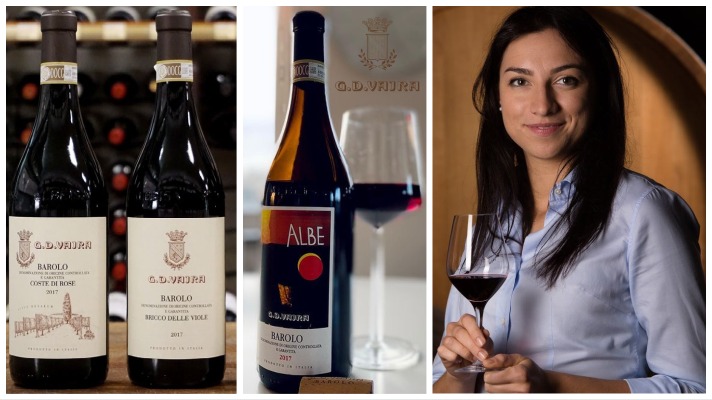
| "I know Barolo is supposed to be great. But which one should I actually buy?"It's the right question. And the honest answer is: most people never get the chance to buy the right one — because the right one never makes it to retail. The greatest Barolos go directly to Michelin-starred restaurant wine programs — to sommeliers at places like two-star Acquerello in San Francisco, three-star The French Laundry in Yountville, and three-star Quince — where they're marked up 3x to 4x and served by the glass for $45 to $85. A bottle on a fine-dining wine list? $225 to $400. The producer we're offering today is one of those "restaurant-only" names. For a very brief window, their wine is here — at retail, at pre-tariff pricing, at a fraction of what restaurants charge. The producer is G.D. Vajra. The wines are 96–98 points. The prices are $89 to $119.
|
| The Story Why Vajra Is the Barolo Insiders Covet
| In 1968, a fifteen-year-old boy named Aldo Vajra took control of his family's vineyards in Vergne — the highest village in all of Barolo. The vines sat at elevations up to 1,585 feet, where the air is cooler, the berries are smaller, the skins are thicker, and the resulting wine possesses an elegance that no flatland vineyard can replicate. He was too young to legally register the winery. So he named it after his father: G.D. Vajra — Giuseppe Domenico Vajra. That humility set the tone for half a century of quiet brilliance. While other producers chased power and extraction, Aldo went the other direction. He obtained one of Piedmont's earliest organic certifications. He fermented and aged in massive, neutral Slavonian oak casks — the way Barolo was made before consultants arrived. He revived forgotten grapes. He even planted Rhine Riesling in Piedmont — an act of gentle audacity. Today, Aldo's children — Giuseppe, Francesca, and Isidoro — farm 100 certified organic acres, including Nebbiolo in some of Barolo's most hallowed crus: Bricco delle Viole, Ravera, Coste di Rose, Fossati, and La Volta. Total production? 1,000 to 3,000 cases per wine. For the entire world. Robert Parker's Wine Advocate has declared G.D. Vajra "one of the most exciting estates to watch today."
|
| Understanding the Style Traditionalist vs. Modernist Barolo — and Where Vajra Stands
| The world of Barolo has been split for decades into two philosophical camps, and understanding them is the key to knowing what you're buying: The Modernists emerged in the 1980s and '90s — producers like Roberto Voerzio and Elio Altare who shortened maceration times, introduced small French oak barriques (225 liters), and aimed for darker color, richer concentration, and more immediate drinkability. These wines tend to be bolder, oakier, and more fruit-forward in youth. They drink well young but can sometimes trade finesse for power. The Traditionalists — producers like Bartolo Mascarello, Giacomo Conterno, Giuseppe Rinaldi, and G.D. Vajra — use extended maceration (20 days to three months), age exclusively in large, neutral Slavonian oak casks (2,000 to 7,500 liters), and never use new French barriques. The result is a wine that tastes of the vineyard, not the barrel — transparent, perfumed, lifted, with the ethereal quality that makes great Nebbiolo unlike anything else on earth. These wines reward patience. They are built to age for decades. G.D. Vajra is firmly and proudly in the traditionalist camp. Their Barolos are macerated for 20 to 30 days (up to three months for certain cuvées) and aged 26+ months in 4,000-, 5,000-, and 7,500-liter Slavonian oak casks. No new French oak. No micro-oxygenation. No shortcuts. The philosophy: let the vineyard speak. What you taste in a Vajra Barolo is elevation, soil, and sun — the roses, the tar, the cherry, the iron — not the winemaker's hand. This is the reason sommeliers love them. And it's the reason Wine Advocate's reviewer used four words rarely seen in professional criticism: "You can't beat this value."
|
Compare traditionalist and modernist styles side by side
|
| The Vintage 2020: The Collector's Vintage
| The 2019, 2020, and 2021 Barolo vintages are widely considered the greatest three-vintage run in modern Barolo history. James Suckling tasted over 400 2020 Barolos and calls the vintage "beautifully approachable" with outstanding aromas and fruit concentration. He compares it to the legendary 2000. Giovanni Gaja — son of the great Angelo Gaja — called 2020 "textbook nebbiolo." Bruna Giacosa of the iconic Bruno Giacosa estate drew the same comparison to 2000 — a vintage she described as having richness combined with elegance and structure. Wine-Searcher's assessment: "an excellent, perhaps even an outstanding vintage" — with classical style, admirable charm, and the structure for 15 to 20 years of drinking pleasure.
|
| What You'll Taste Four Vineyards. Four Distinct Personalities.
|
|
|
|
|
| The Value Comparison What 96–98 Points Actually CostsThe great names of Barolo — Giacomo Conterno, Bartolo Mascarello, Bruno Giacosa, Roberto Voerzio, Giuseppe Rinaldi — are the pinnacle. They are the trophies, the Romanée-Contis of Piedmont. We admire these producers deeply. Here is what their 2020 wines cost:
|
The Bricco delle Viole — 98 points — is the highest-scored wine on this list. It costs $109.97. The next-closest 98-point wine? Voerzio Brunate at $510. Rinaldi Tre Tine at $450. That's 4x to 5x the price for the same or lower score. This isn't a lesser wine at a lower price. This is an equal or higher-scoring wine from a certified organic, high-altitude estate — at a quarter the cost.
|
| Why Barolo Belongs in Your Cellar The Wine Built to Age — and Appreciate
| Barolo is one of the world's great aging wines — rivaled only by Burgundy and Bordeaux. The secret is Nebbiolo itself: the grape is naturally high in both tannin and acidity — the two compounds that act as preservatives. While most red wines plateau and decline after a decade, great Barolo transforms for 20, 30, even 40 years — developing layers of truffle, leather, tobacco, dried roses, and earth that simply don't exist in young wine. This is why collectors buy Barolo by the case. You open one bottle every few years and witness the transformation — from vibrant, perfumed youth to profound, truffle-scented maturity. A case of twelve bottles becomes a twenty-year journey.
And Barolo isn't just an aging wine — it's a proven investment asset. According to the Knight Frank Wealth Report 2025, a $1 million investment in luxury collectibles — including fine wine — made in 2005 would be worth $5.4 million by 2024, outpacing even the S&P 500. The Liv-ex Italy 100 index, which tracks Barolo and Super Tuscan wines, delivered 5-year returns of 22.9%. And in 2024's market correction, Italy was the most resilient wine region, declining just 6% while Burgundy fell over 14%. The 2025 Golden Vines Report names Piedmont the #1 region globally for investment growth potential — ahead of Champagne, Burgundy, and Tuscany. The smart money is moving toward Barolo.
|
| The Case Seven Reasons This Deserves a Case in Your Cellar
| 1. The scores are elite. 96–98 points across Wine Spectator, Wine Advocate, Jeb Dunnuck, Wine Enthusiast, and Vinous. The Bricco delle Viole's 98 is the highest score in the 2020 vintage comparison. 2. The price is a market anomaly. A 98-point Barolo for $110 when every comparable wine costs $350 to $450. This disparity will correct. 3. The production is microscopic. 1,000 to 3,000 cases per wine, globally. When it's gone, it doesn't come back. 4. It's normally restaurant-only. This wine goes to Michelin-starred programs first. Retail allocation is the rare exception. 5. The vintage is historic. Part of the greatest three-vintage run (2019-2020-2021) in modern Barolo history. Critics compare it to the legendary 2000. 6. The aging potential is extraordinary. Drinking windows extend to 2046, 2049, and 2054 — a wine with 20 to 30 years of life ahead. 7. Post-tariff, this price disappears. The 15% tariff on Italian wine (effective August 2025) means future allocations cost more — significantly more. These bottles were imported before the tariff. This is the floor.
|
| How to Serve The Glass, the Cheese, and the Perfect Pairing
| The Glass We recommend the Gabriel-Glas StandArt — the universal wine glass designed by Swiss critic René Gabriel and machine-blown in Austria from a single piece of lead-free crystal. Its broad base and gently conical shape amplifies Nebbiolo's ethereal aromatics — the roses, the tar, the cherry — while the laser-cut, diamond-polished rim delivers the wine to your palate with exceptional precision. Wine Folly praises its flavor delivery as "equal to Zalto." It's the only glass you need for Barolo, Burgundy, or anything in between. Available at Artisan.Wine → Classic Cheese Pairing Parmigiano-Reggiano aged 24–36 months is the universal match: its crystalline, umami-rich texture meets Nebbiolo's tannins head-on, and both become greater than the sum. Castelmagno DOP — a crumbly, cave-aged Piedmontese cheese with earthy, mushroomy depth — mirrors the wine's truffle and leather notes. For something approachable: Fontina Val d'Aosta, semi-soft, nutty, and gently funky. Classic Meat Pairing Braised short ribs or osso buco — slow-cooked, rich, and falling apart. The collagen-rich sauce dissolves into the tannins. Herb-crusted rack of lamb is Wine Spectator's recommended match for the Albe. And of course: fresh tajarin pasta with shaved white truffle during October through December is the reason Barolo exists. Vegan Pairing Risotto with porcini mushrooms and truffle oil — the umami from dried porcini plays the same role as aged cheese, softening tannins and drawing out the wine's savory depth. For a main course: roasted beet and walnut ragù over fresh pappardelle provides the iron-rich earthiness Nebbiolo craves. For simplicity: grilled portobello with rosemary, balsamic reduction, and shaved black truffle.
| Last Call · Pre-Tariff Pricing 4 Magnums. 49 Bottles.
|



| ||
| ||
| ||
|
| Order Now — Artisan.Wine → |
| Browse All Barolos | | | Gabriel-Glas Stemware |
P.S. These are pre-tariff bottles. As of August 2025, Italian wine entering the U.S. carries a 15% import tariff — and that cost hits at every tier. What costs $110 today could reach $130–$140 on the next allocation, assuming there even is a next allocation for a wine this small in production.
The price you see now is the lowest this wine will ever be. The only question is whether you buy it today or wish you had. Shop now at Artisan.Wine →
Cheers,
James Tran
Artisan Wine & Spirits · Mountain View, CA
Questions? sales@artisan.wine · artisan.wine
Leave a comment